The Architecture Problem: Why Tech Stacks Fall Apart
Growing enterprise organizations frequently suffer from accumulated technical debt within their operational workflows. Systems are often added on an ad-hoc basis: an isolated CRM deployed by sales, a legacy ERP managed by finance, and fragile spreadsheet macros attempting to stitch everything together. In software engineering, we call this dynamic Spaghetti Architecture. When core business logic is not integrated cleanly across platforms, manual overhead spikes, critical data silos emerge, and enterprise scalability grinds to a halt.
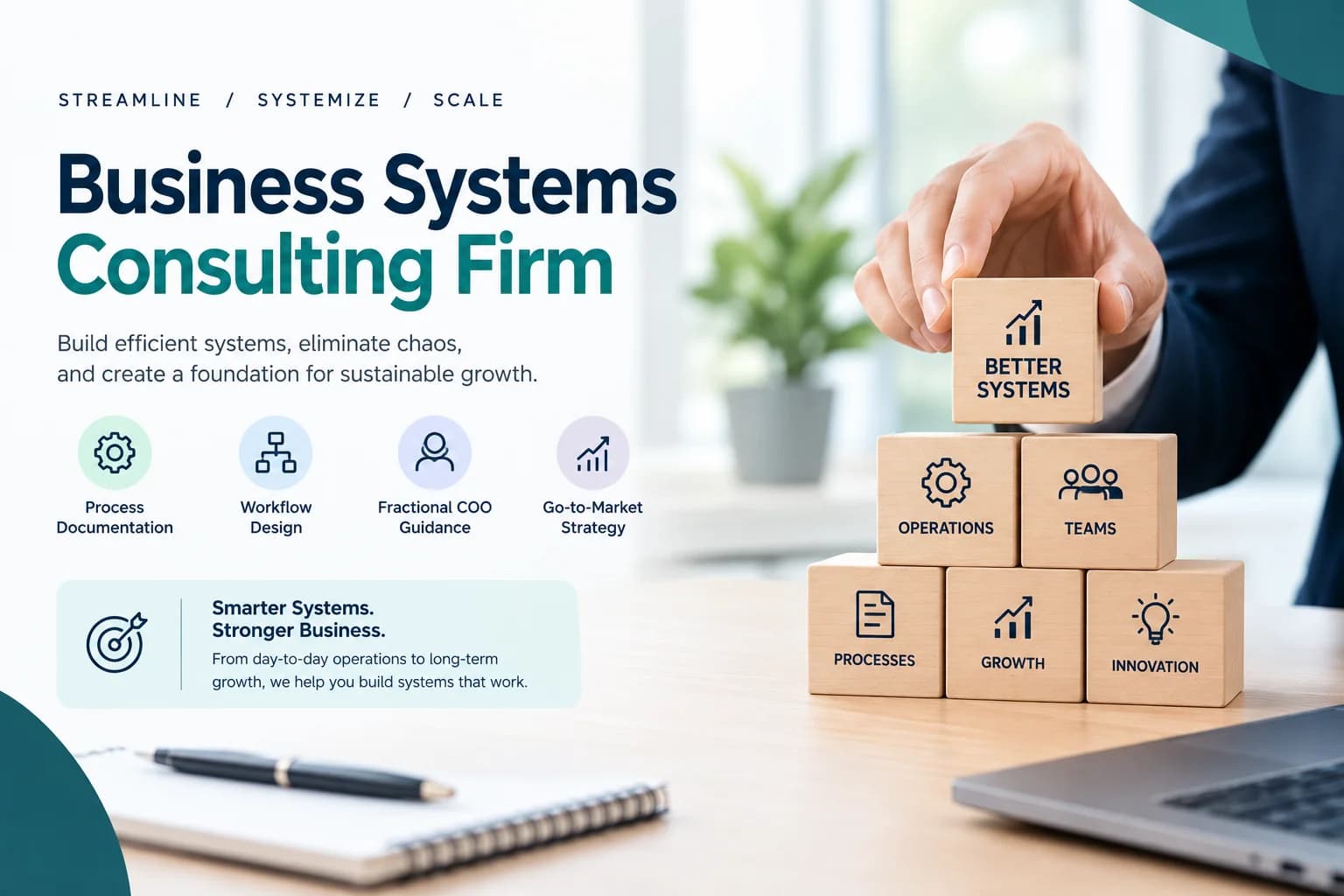
Business systems consulting bridges the gap between high-level corporate strategy and low-level technical execution. Instead of viewing enterprise software as a collection of disconnected tools, a systems consultant analyzes your entire operational ecosystem as a unified application stack. Process refactoring is not merely about adopting trendy software platforms; it centers on engineering reliable, fault-tolerant, and automated data pipelines across every business department. When you align enterprise business rules with modern system architecture, you eliminate redundant manual labor, unlock real-time business intelligence, and create a resilient platform engineered for sustainable growth.
Eliminating Data Silos Through Custom Integration Architectures
The root cause of operational friction in modern enterprises is rarely a lack of software—it is poor system interoperability. When your marketing automation suite, sales CRM, inventory management software, and core accounting ERP fail to communicate via well-defined APIs, your staff becomes human routers manually shuffling data across databases.
A strategic business systems consulting firm applies rigorous software integration practices to build high-throughput data architectures. Key strategies include:
- API-First Integration Strategy: Replacing fragile file exports and manual batch updates with event-driven webhooks, RESTful services, and GraphQL endpoints for real-time synchronization.
- Single Source of Truth (SSOT): Designing centralized data warehouses and Master Data Management (MDM) layers to ensure every department references unified, real-time analytics.
- Automated Workflow Orchestration: Deploying robust integration platform as a service (iPaaS) solutions or enterprise service buses (ESB) to manage cross-platform business processes seamlessly.
- Decoupled Architecture: Ensuring legacy platforms can be refactored, updated, or swapped out entirely without breaking downstream business logic or third-party dependencies.
By treating internal data pipelines with the same discipline as production application code, consultants eliminate data drift, operational latency, and human error across the enterprise.
Process Refactoring: Translating Business Logic into Scalable Architecture
Upgrading your software stack without optimizing underlying operational workflows is equivalent to deploying buggy code to a faster cloud server—it simply generates errors faster. Real digital transformation demands comprehensive process refactoring prior to technical deployment.
To refactor enterprise operations effectively, consultants execute precise engineering methodologies:
- Workflow Mapping & Bottleneck Analysis: Documenting end-to-end business operations down to conditional logic branches to identify latency, redundant approvals, and manual intervention points.
- Standardization Prior to Automation: Restructuring chaotic, uncodified business practices into clean, deterministic workflows before implementing automated code or low-code automation tools.
- ERP & CRM Optimization: Reconfiguring core enterprise systems to reflect streamlined business logic rather than forcing legacy operational habits into modern platforms.
- Telemetry & Exception Handling: Implementing real-time monitoring tools to track data flows and automatically alert technical teams when sync exceptions or process failures occur.
When business operations are optimized through engineering principles, every workflow stage becomes deterministic, scalable, and measurable—substantially reducing operating expenses while maximizing overall business throughput.
Modernize Your Enterprise Architecture with Expert Consulting
Building an enterprise tech stack capable of supporting aggressive scaling requires more than licensing off-the-shelf SaaS products. It demands intentional system architecture, clean interface design, and continuous operational refactoring. Unaddressed system fragmentation acts as a tax on your organization’s productivity, agility, and bottom-line profit.
A specialized business systems consulting firm brings software engineering discipline to high-level management strategy. By systematically refactoring legacy processes, breaking down enterprise data silos, and deploying robust API integrations, consulting experts empower your business to run with the speed and reliability of a modern enterprise application.
Ready to refactor your operational stack and build an automated framework for growth? Contact our business systems consulting team today to schedule an enterprise system architecture audit and map out your digital evolution.